A bit over a year ago, I posted some thoughts on alternative ways of archiving a directory full of large files. I compared tar, SquashFS, and DwarFS archives on the raw files and a Borg Backup archive of the files. The interesting thing I noted at the time was that DwarFS was much slower than the other alternatives for some reason. Others have not reported this, so I leaned toward blaming the hardware (an old Intel MacBook Pro).
I noticed that DwarFS has been updated a few times since then, so I thought it would be worth repeating the comparison with the same laptop but newer versions of the tools.1 I found that the trend still holds, and I also discovered that DwarFS has a huge variance in run time, and I’m not sure why. For this year’s charts, I’ve added error bars showing the standard deviation of three runs of the same protocol.
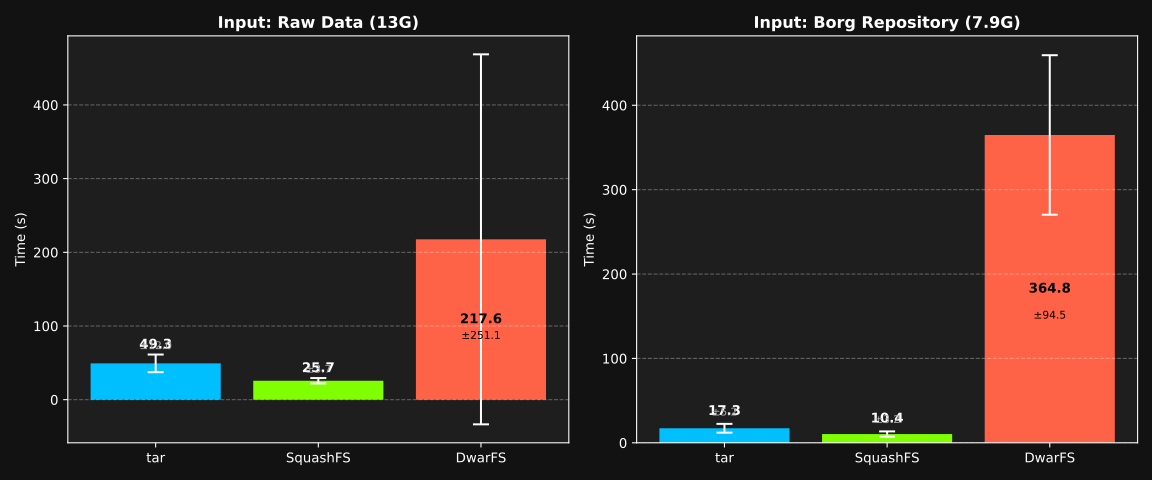
Figure 1: Creation time in seconds.
Notice that sometimes DwarFS goes pretty fast, and sometimes it is very very slow. In fact, it ranged from 30 to 502 seconds! The other tools are more consistent. I still have no idea why I’m seeing strange performance characteristics from DwarFS.
DwarFS still wins in archive size (smaller is better), but not by much. This graph didn’t change much at all from last year2:
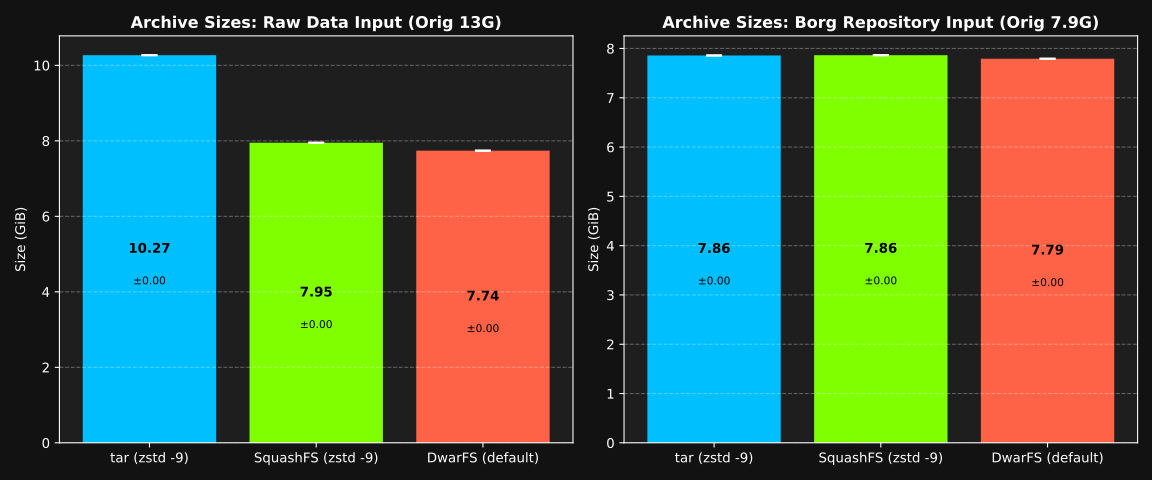
Figure 2: Resulting archive size (in bytes).
-
DwarFS version: v0.15.1 [2026-03-21], BorgBackup version 1.4.3, bsdtar version 3.5.3. ↩︎
-
The Borg repository size in the second chart title is a bit different; it is the same dataset, but I think a version change in Borg Backup might explain it; or it is an artifact of recreating the borg archive. I’m not entirely certain. ↩︎